
Fire has been part of ecosystems for longer than we can comprehend. It is a vital part of many ecosystem processes and functions.
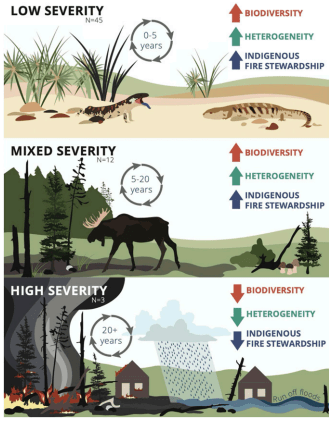
Fire plays a critical role in the structure and functioning of some biomes. Thus, any changes in this driver will result in altered ecosystem functioning thereby causing the ecosystem to shift as a whole. The Orgon Explorer defines fire as a long-term natural pattern in a particular habitat. The severity of a fire is determined by its frequency, intensity, size, pattern, season, and severity. With little change in ecological structure, an under-forest fire system exists however because of human involvement, most habitats have altered in the forest stand replacement system, and the vegetation structure has changed dramatically. The severity of the fire determines the alterations and changes in vegetation this together with mixed fire severity determines the extent to which the environment is affected.
As a result of human interference in ecosystems, modifications to fire have seen a rise through the years. The availability of water in the soil is one of the key abiotic factors in this system, such that grasses and trees compete for it. The intensity of the fire in a savanna-type biome determines the types of vegetation that dominate this biome. Woody vegetation is the most affected by these regimes as wildfires have led to the reduction of this vegetation type because the fires kill trees and reduce their size.
So what is fire conservation?

Fire conservation is the utilization of fire as a means of conservation of biodiversity in management systems. However, only for systems with fire-mediated regimes. These systems are classified as non-fire systems because the presence of fire could potentially destroy the entire system, and once a fire occurs, it is usually impossible for the environment to recover.
However, in recent years, the world’s climatic patterns have changed dramatically, owing mostly to anthropogenic activity. Changes in precipitation and temperature have resulted as a result of this. As a result, flood and drought occurrences are becoming more variable, and habitats and people are becoming increasingly vulnerable to these changes. Drought occurrences and greater wildfires might result from temperatures rising above average. This might lead to an excess of herbaceous plants in areas where woody vegetation formerly predominated, with the reverse being true should there be more precipitation.

How to go about it…
Fire conditions vary from system to system, this is because the biomass, fuel, and productivity of systems vary. Grasslands burn often, and seedling inheritance in this vegetation is highly dependent on the fire state. As a result, the importance of fire in these systems cannot be overlooked. Climate Change, on the other hand, cannot be avoided since it modifies the system’s general structure. Long periods of dryness, as well as human activity such as logging, can lead the canopy to open up, making forests and plants more prone to flames. Increased rainfall, for example, will create changes in plant structure, leading to tree dominance.
- Prescribed burning
Fire is still needed on the landscape today, according to management authorities. Prescribed or controlled fires are currently used by many organizations to maintain habitat, avoid fuel build-up, and encourage vegetative growth or regeneration. Like fires need rigorous preparation and consideration of environmental factors such as humidity, wind speed and direction, and precipitation. Because many of these fires occur in populated areas, the circumstances must be ideal to prevent a burn from becoming out of control or causing smoke to trouble surrounding homes or businesses. The window of time in which an area may be burnt safely is sometimes rather narrow, resulting in well-known spring and fall burning seasons.
2. Hierarchical Fire Management
Allows for the management of fires in larger areas with different fire intensity needs to allow for appropriate responses to different vegetation.
 Water Mania
Leave a comment