
“Soil conservation is the protection of soil from erosion and other types of deterioration, so as to maintain soil fertility and productivity. It generally includes watershed management and water use.”
Soil offers a solid foundation on which we may live and create. It feeds trees, plants, crops, animals, and a hundred million microbes, all of which are necessary for life to continue on our planet. If the soil becomes unsuitable or unstable, the entire process comes to a halt; nothing else can grow or decompose.
Soil is likely one of the most species-rich habitats in terrestrial ecosystems, especially when the term includes associated habitats such as vertebrate feces, decomposing wood, and the humus of hollow trees (i.e. epiphytic soils). Soil community diversity likely comprises a high proportion of terrestrial species.
Larger, more visible animals and plants are badly impacted by agrochemicals employed in intensive food production, but we don’t know how agrochemicals affect the multitudes of bacteria, fungus, and minute invertebrate creatures that support ecosystem productivity.
What is soil conservation?
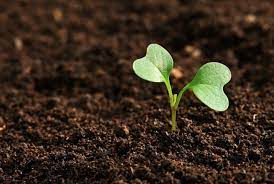
Biodiversity occurs at multiple spatial scales and levels of biological organization, and with the increasing occurrence of extinctions in recent years, there is an increasing need to conserve the underlying ecological processes that support the patterns of biological diversity. Soil conservation is described as preventing the loss of the soil’s upper layer. In essence, it protects dirt from the several problems to which it is prone. Dirt isn’t only something you put in your flower gardens, despite what you might assume. It is required at several times during the life cycle. Soil conservation refers to the process of reducing soil erosion and loss of fertility due to factors such as overuse, acidification, salinization, or contamination by man-made substances.
What causes soil erosion?

Soil erosion is caused by a variety of conditions from loss of topsoil, drought, overgrazing, fire etc.
One of the most significant causes of large-scale soil erosion is deforestation. Clear-cutting and deforestation can deplete the remaining soil’s nutrients over time, resulting in full-scale desertification.
Farming can also result in soil erosion through the loss of the top soil due to either poor farming practices or the overexploitation of ariable land. Over-farming or unsustainable agricultural techniques deplete large amounts of nutrients from the soil, resulting in soil sterility. This sort of soil damage is commonly associated with erosion and slash-and-burn farming, and happens when the nutrients in harvested products exceed the nutrients provided. This is most common in big, commercial agricultural regions, when the crops’ nutritional requirements are met by the soil itself.
However, agricultural practices are not the only way in which soil can become degradated. Natural disasters such as flood lead to over-saturation of the soil causing mud-slides. While rain can cause surface run-off leading to the loss of valuable top-soil.
Effects on biological life-forms:
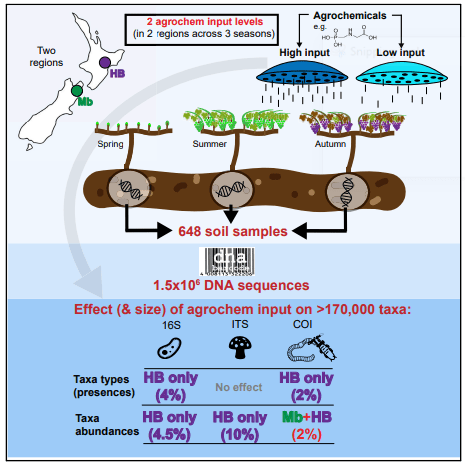
Soils not only have huge levels of biodiversity but also serve as a repository for DNA for many organisms in an ecosystem. The effect of soil degradation on larger animals is well documented with habitat loss cited as the major factor. However, little research has been done on the effect it has on soil micro-organisms and other aspects of ecosystem functioning. The image above shows the effect of various agricultural chemicals on the soil and its flora and fauna.
How to go about it…
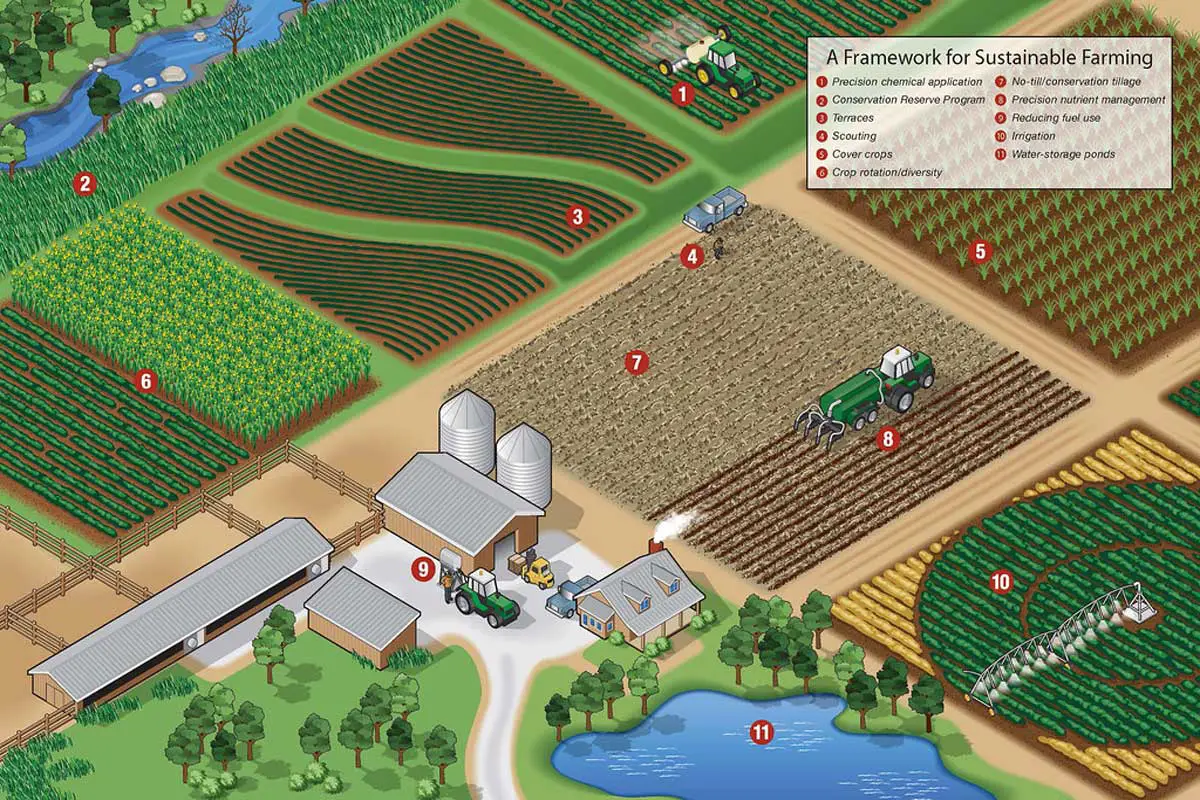
There are various ways to go about conserving soil. Some of which have long been in place especially in the agricultural sector.
These include and are not limited to
- Crop roatation
- Crop covering
- Wind breaks
- Contour farming
- Revegetating of degraded lands
- Ending deforestation
- Improving legislature to account for soil conservation
Soil micro-organisms play a vital role in the functioning of ecosystems therefore it is important that these be considered in conservation management as the loss of soil and the various functions it provides could be catastrophic.
 Water Mania
Leave a comment